Slow Decluttering: How Many of Everything You Actually Need
Slow decluttering is cutting things down a little at a time, then waiting to see what you actually use before you cut again. It’s how my house ended up with five tea towels, three bath towels and four plates, without me ever doing a big clear-out or sitting down to pick a number.
Nothing in this house has a number I chose. The wash cycle chose them. How often you wash something decides how many of it you need, and once my laundry was running every day, the numbers in the drawers started coming down on their own.
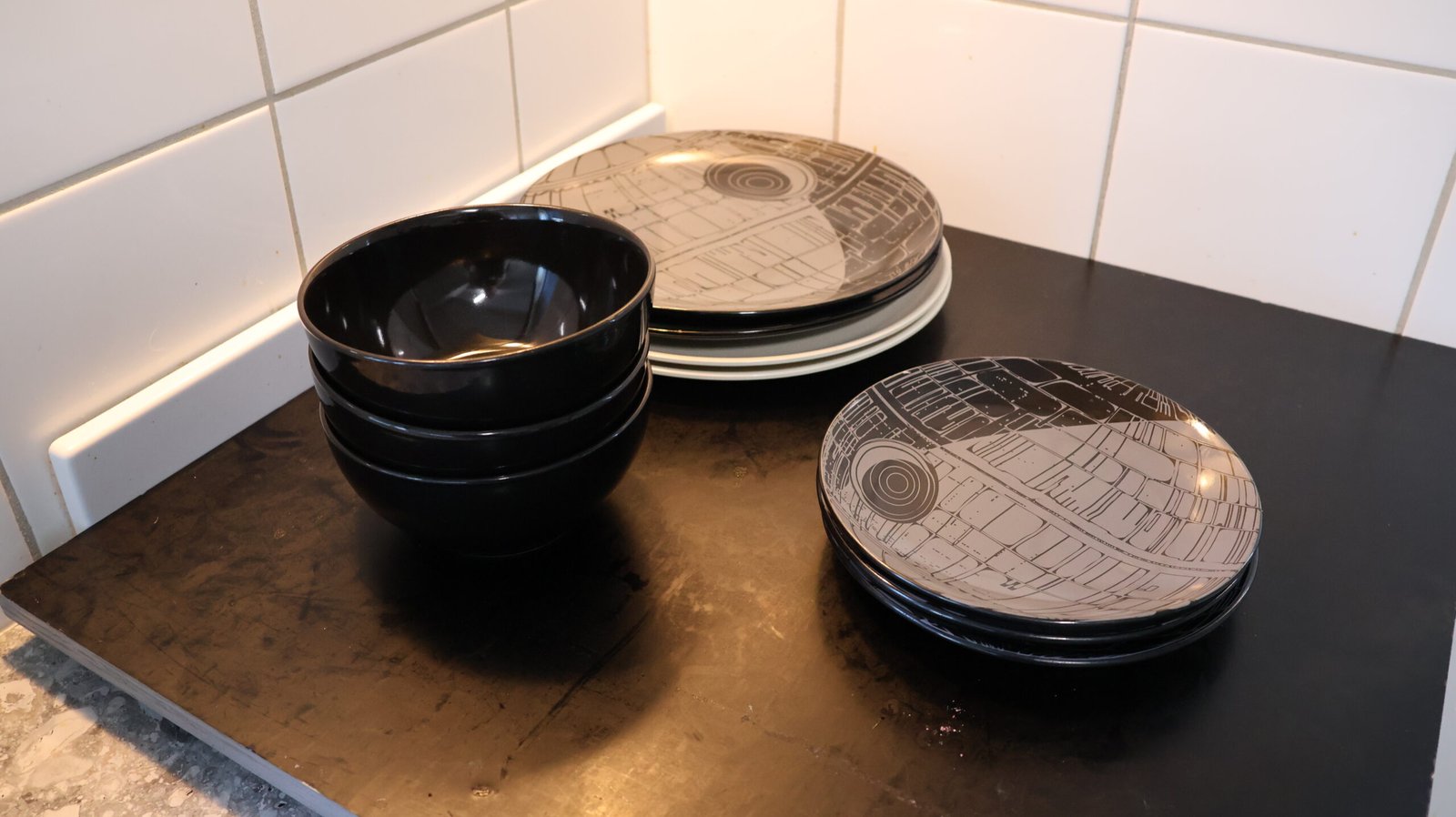
When I was married with six kids at home, we had twenty plates, thirty cups and twenty water bottles, plus a separate pile of thirty of each for Christmas and birthdays. Now it’s four plates. This is every drawer in the house, the number in it, and why it’s that number. Including the time I cut too far.
What is slow decluttering?
Slow decluttering means making one small cut, living with it, and only cutting again once you’ve watched what you actually reach for. There’s no weekend clear-out and no target number. The number turns up on its own, and because nothing goes straight in the bin, nothing gets thrown out on a feeling.
There’s a Japanese word for it: kaizen. It really just means continuous improvement. You don’t try to fix everything at once. You make a small change, about two percent, live with it for a while, and then make the next one.
I spent more than twenty years in lean manufacturing doing exactly that in factories. It took me a long time to do it at home. It started with the laundry. Last month I got my laundry routine down from fifteen steps to three, and once the washing ran every day, every other number in the house started to look wrong.
The bath towels are a good example. There used to be about ten, and I noticed I only ever reached for three or four, so I cut it to six. I left it a couple of months, and three of them were still sitting there untouched. So I cut it again. Cut a bit, wait, watch what you actually reach for, cut again. That’s the two percent.
How do you work out how many of something you need?
Own enough to cover the gap between washes. That’s the whole rule. Wash something every day and you only need a few. Leave it a fortnight and you’ll need a drawer full. So the question was never how many I should own. It’s how long the gap is, and then owning enough to cover it.
Which is why my number probably won’t be yours, and that’s fine.
If you work in a shed on a forty-degree day, you might change three times. Someone at a desk might not change all day. If you’ve got kids having a sandwich twice a day plus morning tea, you’ll need more plates than I do, because your cycle fills up before it runs.
The rule doesn’t change. The gap is yours. So I’m not going to give you a number to copy. Here’s mine, and what set each one.
| Item | Before | Now | What set the number |
| Tea towels | About 12 | 5 | Washed every day, so one day’s worth plus one |
| Dish cloths | A bulk roll of disposables | 5 washable | They go through the daily wash with everything else |
| Bath towels | About 10 | 3 | In the wash at night, back on the rail in the morning |
| Plates | 20 | 4 | Washed as I go, and plates come in fours |
| Chopping boards | 4 | 2, as the old ones wear out | One for chicken, one for everything else |
| Kids’ clothes | — | About 3 changes each | The washing runs every day, and pyjamas cover a bad day |
| Socks | Ten odd ones that matched nothing | One make, one style, overstocked on purpose | Some days are two pairs |
Every number in the last column comes from a wash, a habit or a reason. None of them came from wanting to own less.
How many tea towels and bath towels do you actually need?
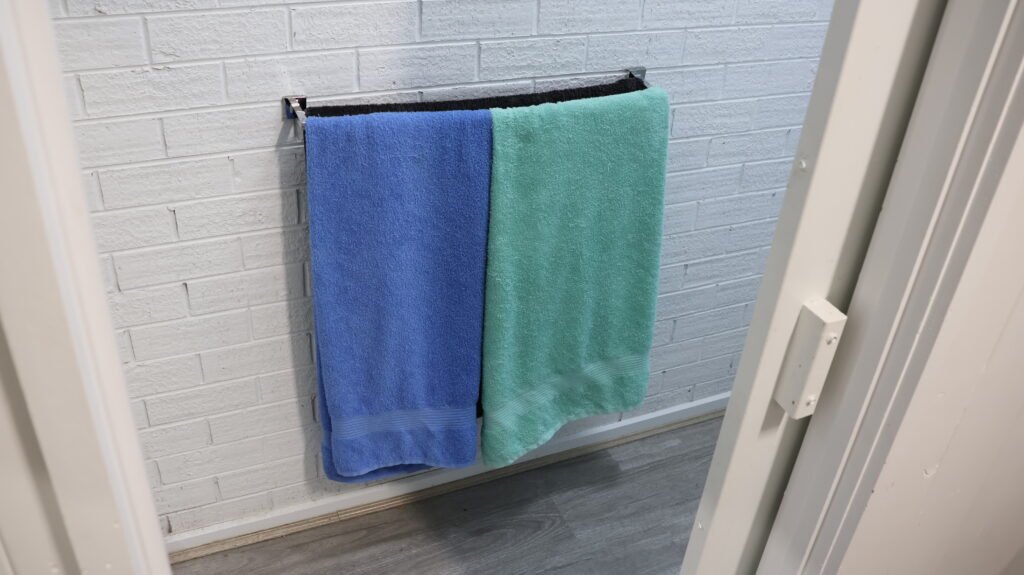
If tea towels go through the wash every day, you need enough for one day plus one. For me that’s five. Bath towels that go in the wash at night and are back on the rail by morning only need the one set. For this house that’s three.
I used to have about twelve tea towels. I never chose twelve, they just accumulated. A couple here, a set as a gift, and the drawer filled itself up. Once they started going through the wash every day, five was plenty.
The bit I didn’t expect was that five instead of twelve meant I could buy better ones. Same money, just better towels. So fewer things wasn’t really the point. It’s what let me afford decent ones.
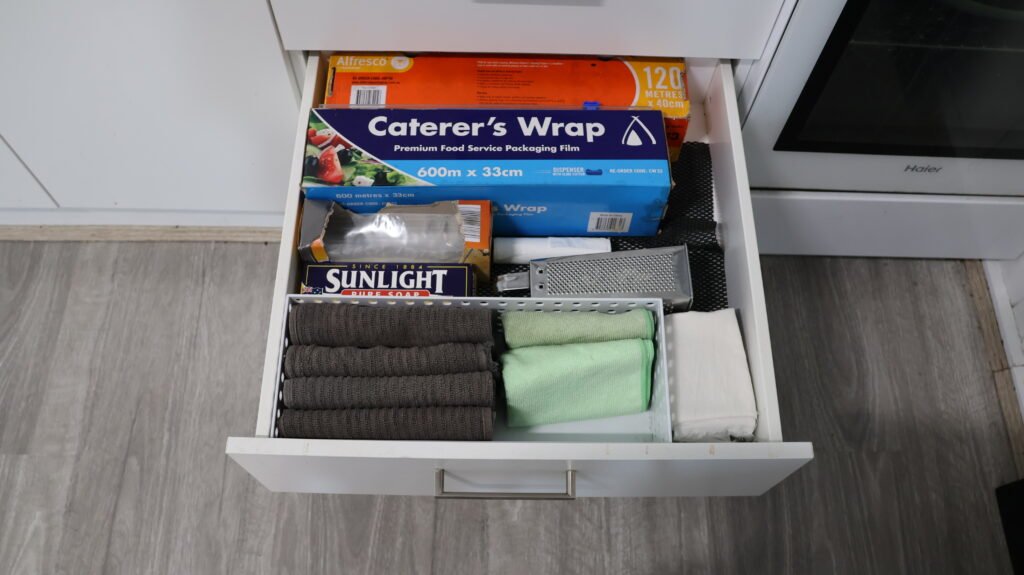
The cloths next to them were a different problem. I used to buy a bulk roll of disposable Chux. Buy a big roll, forget to reorder, run out, then panic-buy another roll at full price because I had nothing. It wasn’t really the cost that got me. The disposables needed their own stock cycle sitting on top of the washing, and I kept failing at it. Now there are five washable cloths that go through the wash with everything else. Five cloths got rid of a whole second cycle I kept dropping.
The bath towels came down for a reason that had nothing to do with owning less. I’d wash the towels and hang a fresh set out, and the washed ones would be dry and folded away before anyone had even used the fresh ones. I was basically doing a load of washing for nobody.
At work, that’s one of the first wastes you go looking for: making something before anyone actually needs it. So now there’s three. I just didn’t want to keep doing work that wasn’t for anything.
How many plates does one person need?
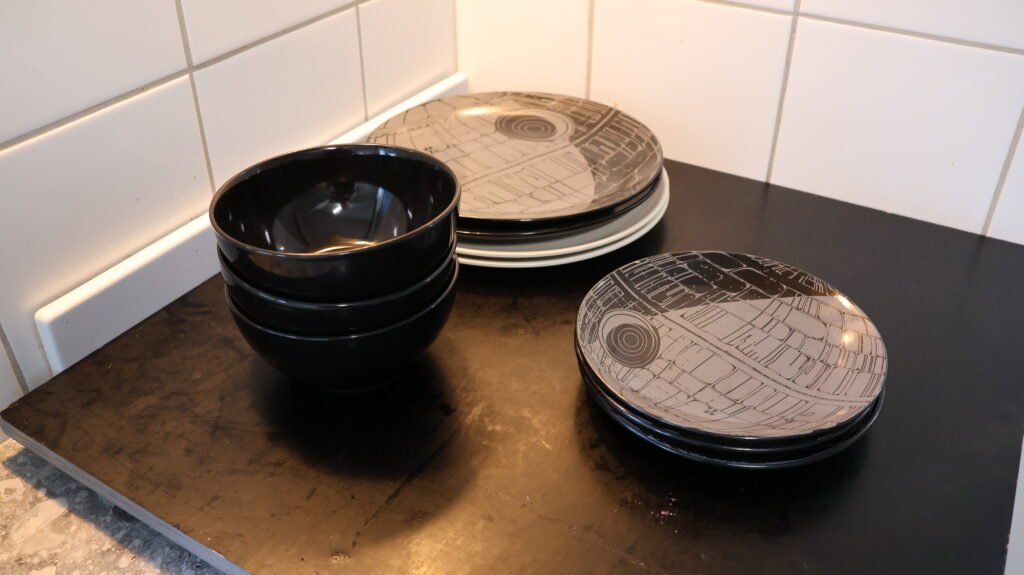
As many as get used before the washing up runs. If you wash up as you go, that’s fewer than you’d think. I own four plates, four bowls, four of everything really. I’d probably be fine with three, but plates come in fours, so the set size did the deciding for me.
The kitchen is where my numbers were the most out of date. Twenty plates made sense with six kids at home. The household changed but the number didn’t, and a number doesn’t survive a change like that unless somebody actually goes and has a good look at it.
Here’s the honest part. Four plates only works because I wash up as I go. A plate gets used, then it gets washed. If the washing up piled up, four plates would be a problem by lunchtime. So if you take one thing from this section, fix the washing before you touch the number. Cut the number without fixing the habit and you haven’t simplified anything. You’ve just made life harder for yourself.
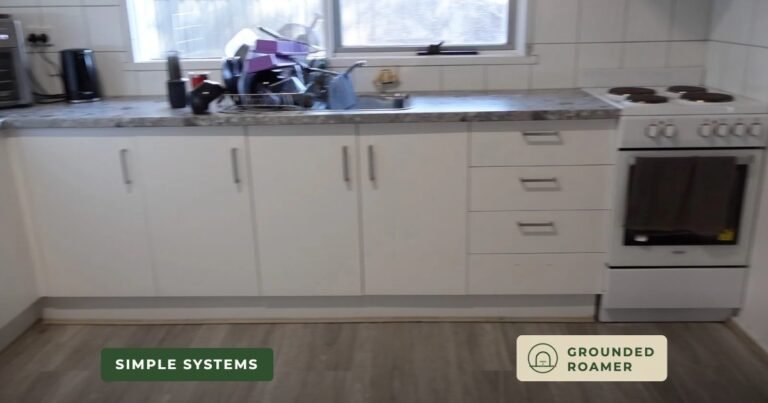
My plates do have a cupboard, but more often than not they spend their time on the drying rack. Washed, onto the rack, and at the next meal I just take one off. Putting them away was two extra touches that weren’t doing anything. It felt a bit like mess sitting out at first. It isn’t. It’s a clean plate sitting where I use it.
The chopping boards are still a work in progress. I’ve got four, and three of them are plastic and getting ready to split. As they go, I’m not replacing them. The only split that really matters is one for chicken and one for everything else. It’s the same reason we colour-code things at work, so nobody has to think about it and there’s no cross-contamination. I’m not going to throw out working gear just to hit a number. I’m letting them finish, and then I won’t buy them again.
And I’ve never owned a good set of anything. There are no special plates in a cupboard waiting for visitors. When the boys come over, I just grab the camping set out of the camper. It’s already a set, it’s already packed, and nobody’s ever said a word about it.
How many clothes do you actually need?
Enough to cover the gap between washes, with one exception: the things you’d hate to run out of. My whole wardrobe rail at home is a work shirt and work pants, a dress shirt and dress pants, a puffer, a jumper and a couple of the kids’ jackets. That’s all of it.
It’s not that I threw a heap of stuff out. Clothes live where they get worn, and because I work away during the week, I only keep here what I actually wear at home and to and from work.
The kids have about three changes each here, and three’s enough because the washing runs every day. If it’s a bad day, wet, muddy, dinner down the front, the pyjamas just go on early. Nobody minds. I don’t see that as the system failing. It’s the system bending, which is a bit different. A system that only works on the good days isn’t really a system, it’s just luck.
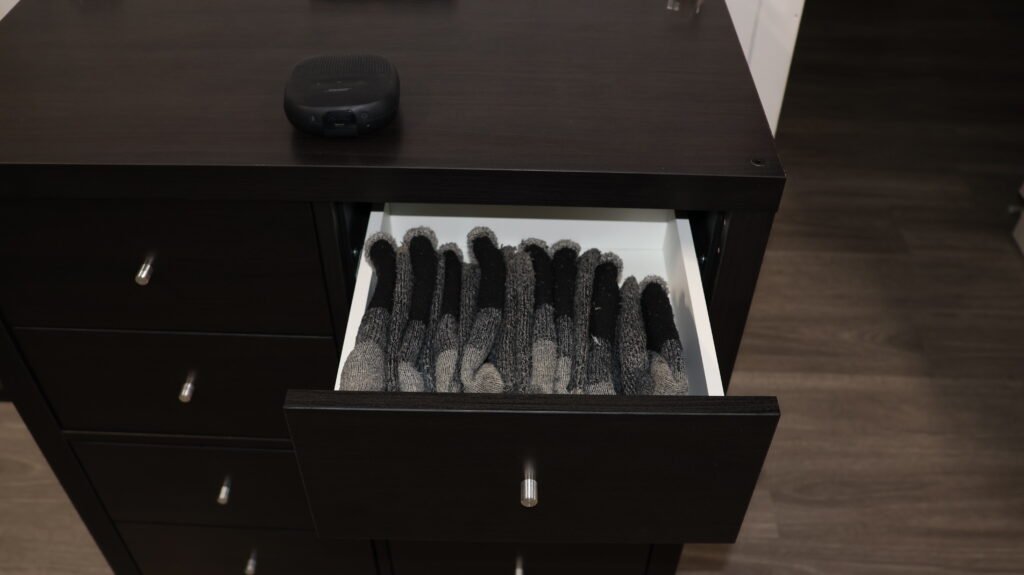
Socks are where I went the other way. I’ve got one make and one style, thick Merino Country ones. I used to have ten odd socks that didn’t match anything. Buy the one style and that stops, because a hole only costs you a sock, not a pair. They breathe in summer and winter, and they’re thick enough for boots that need a thick sock.
And I’ll admit I own too many of them, on purpose. Socks and undies are the one place I overstock, because some days are two pairs. Everything else is cut back to the number, but those have to cover the worst day.
How do you declutter without regretting it?
Don’t throw anything out on the day you cut it. Everything I cut goes in a box, not the bin. If I haven’t opened that box in six months, what’s in it goes. If I’m going into the box to get something back out, I’ve cut too far, and it goes back.
I’ve done that. I cut the cleaning cloths too hard once. I’d bought twenty and got down to one of each colour, then mopped up a spill and had nothing left to do my reset with. That’s the signal, and it’s the useful half of the box. It works both ways.
The box is basically my undo button. It’s the reason I can cut things back without having to be brave about it.
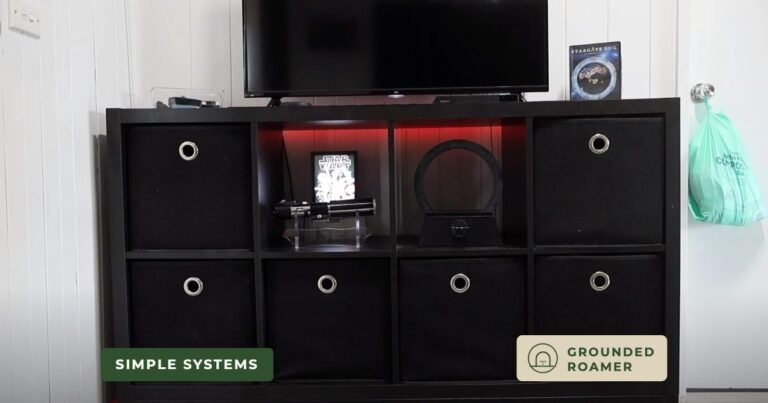
When I do need to buy something, I test with the cheap version first, and it’s not really about the money. The drawers in my room started as cube boxes. Then I tried clear acrylic ones at twenty dollars each, just to see if the layout worked. It did, so I upgraded to the proper Kallax inserts at thirty-five, and the acrylic ones went into the kids’ room to run the same test again.
Twenty against thirty-five isn’t much of a saving. The point is the acrylics can go anywhere afterwards, but the inserts only fit a Kallax. So I test with the thing that still has a job to do if the test doesn’t work out.
What happens if the washing machine breaks?
You use a fallback, and small numbers need one. Hand washing in the sink, the laundromat, a dryer at the park in winter. I know they work because I didn’t own a washing machine for the first year here. Everything went to the laundromat. So the what-if is already answered. It was a year of my life.
The machine hasn’t failed since. But all of that still works, and I’ve done all of it. Not woollens in a dryer though. That’s the one thing I won’t do.
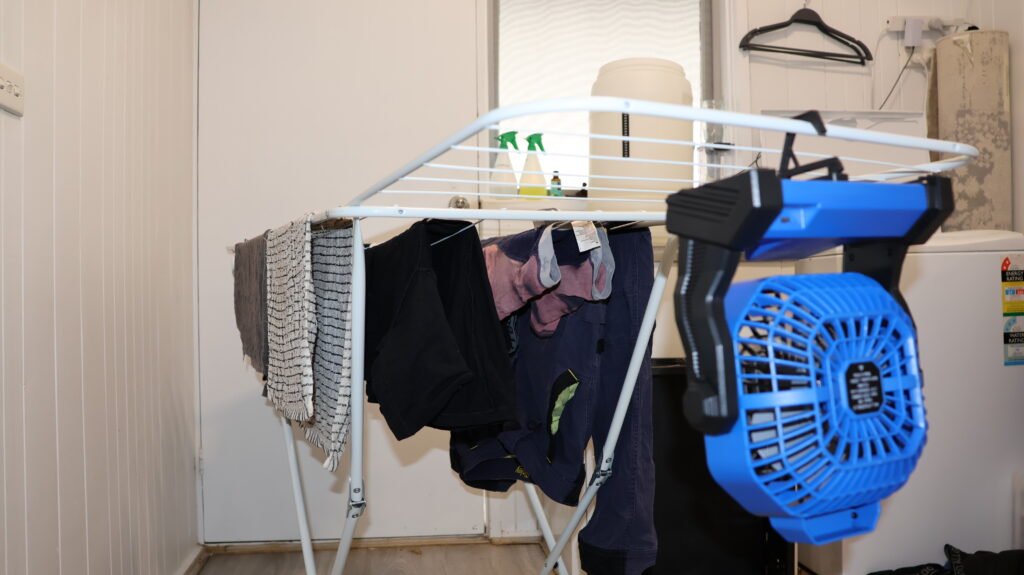
Rain’s the same. If it rains for a week, the airer comes inside and I point one of the camper fans at it. They’re already there, just sitting around between trips. It’s moving air that dries things, not heat, and heat’s the expensive part. If there’s wind outside, that’s free. Just peg the airer, or you’ll be picking shirts off the lawn.
So that’s what makes small numbers feel safe to me. I’m not attached to the method. I’m attached to the cycle running.
What does slow decluttering give back?
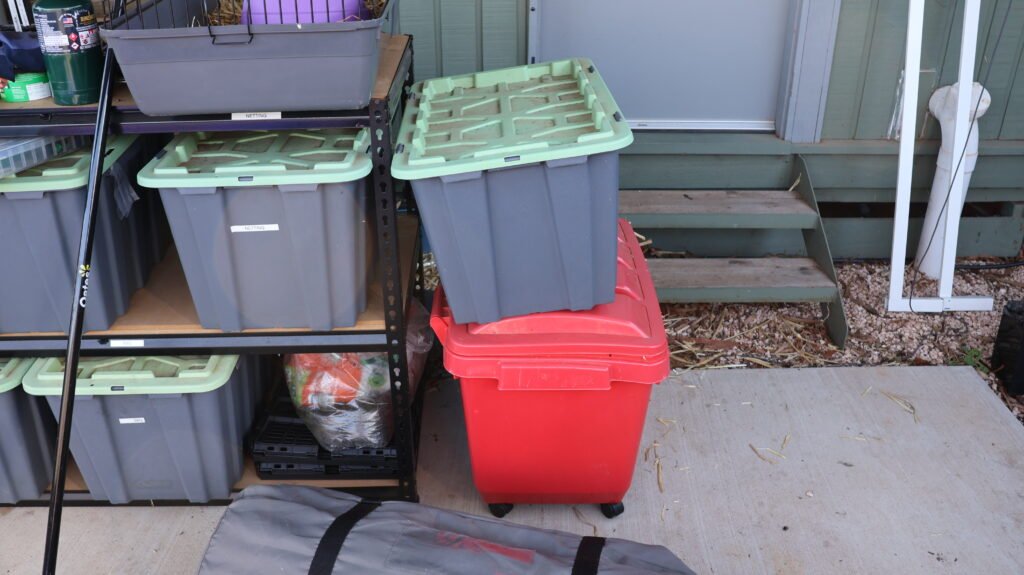
Space, mostly, and it keeps going. Every time a number came down, a bit of space appeared, and then that space swallowed something else. The towels came down, a drawer emptied, the pots moved into it, and then that cupboard got sorted too. Once enough drawers had emptied, a whole shelving unit had nothing left on it. It went outside, and now it holds the garden and BBQ gear.
I never actually set out to own less. I just kept getting paid in space. It’s the same chain reaction I wrote about in The Domino Reset, just slower.
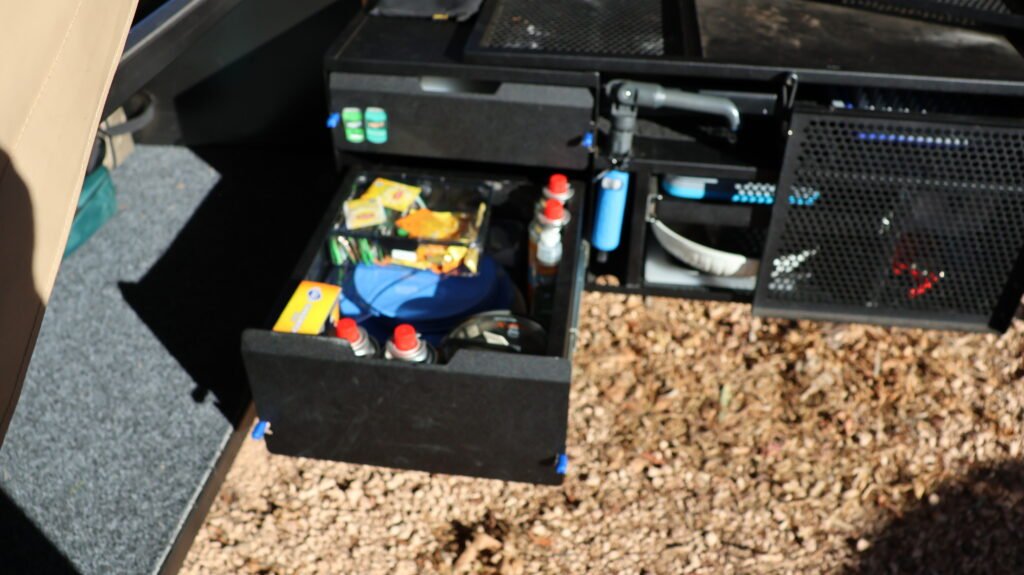
The camper is the other payoff. Nothing in it was bought for the camper. The three bath towels from the bathroom go in it, the cloths come out of the same twenty-pack as the house ones, and the plates are the set we use when people visit. One lot of things, two places. If it’s good enough for the house, it’s good enough for the camper. And if it isn’t, I’d be asking why it’s in the house.
Packing works the same way. One packing cube is one day: a shirt, undies and socks all in together, and one more cube for the shower stuff. No digging through a bag looking for a sock at six in the morning. That only works because there isn’t much to choose from in the first place. The drawer already did the deciding, months ago.
Who won’t slow decluttering work for?
Two honest limits, because a number that only works in my house isn’t much use to anyone else.
It won’t work if the washing waits. Every number here depends on a short gap between washes. If the dishes sit until the weekend or the laundry runs once a fortnight, you need more, and that’s the right answer for your house. Fix the cycle first, or count against the cycle you’ve actually got.
It won’t work if you need it done this weekend. The waiting is the method. Ten bath towels to three took two cuts and a couple of months in between. If a room has to be empty by Saturday, this isn’t that.
Everything on this page is a subtraction, and you don’t need to buy anything to start. Count one drawer, then work out how long the gap is between washes.
The loop behind every one of these numbers, notice something, change one thing, live with it, then check it stayed, is what The Grounded Home System is built on. The guides are free.
Frequently asked questions
Is it okay to wash towels once a week?
Yes, as long as you own enough to cover the week. That’s the trade. Wash weekly and you need a week’s worth of towels and somewhere to keep them. Mine go in the wash at night and back on the rail in the morning, so three covers this house. Neither is wrong. The gap between washes sets the number.
How many bath towels should one person own?
It depends on how often you wash them. Count the days between washes and own enough to cover them. I went from about ten bath towels to six, waited a couple of months, then cut to three, because three was all that ever got used.
Should I get six or eight plates?
Count how many get used before the washing up runs. If you wash up as you go, it’s fewer than you’d think. I have four because plates come in fours, and I’d probably be fine with three. For visitors, I use the camping set rather than keeping a good set in a cupboard.
What are the biggest decluttering mistakes?
The two I’ve made: cutting a number without fixing the habit behind it, and cutting too far. Four plates without washing up as you go is a problem by lunchtime. Cutting the cleaning cloths to one of each colour left me with nothing after one spill. Cutting slowly, and keeping a box for six months, stops both.
Do I need to buy anything to start slow decluttering?
No. You need a box for the things you cut and a bit of patience. If you do end up buying storage, test with a cheap version that can be used somewhere else if the layout doesn’t work.
Home Decluttering Tips Using the 5S Method
Author bio
Grounded Roamer is written by a lean manufacturing practitioner with 20+ years experience creating systems that make everyday life run with less friction. Based in Mildura, Victoria, Australia — documenting a quieter, more self-sufficient way of living, one small adjustment at a time.