Adding Insect Protection and Resetting the Winter Herb Tower
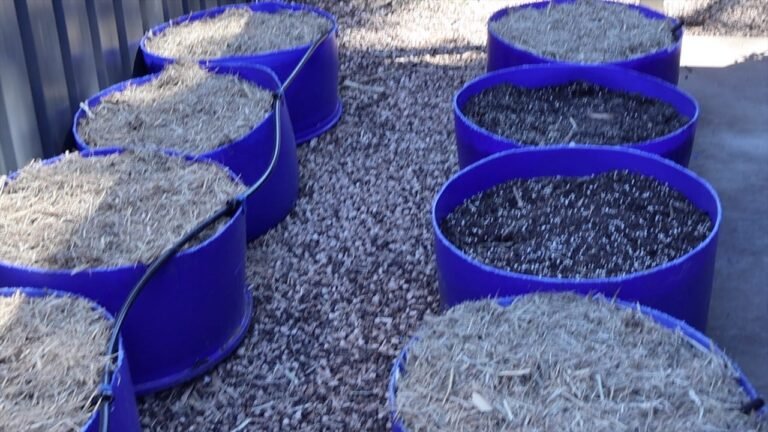
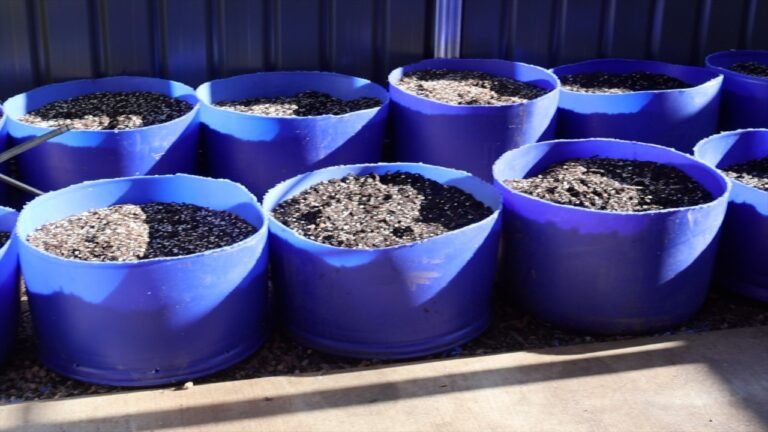
I’ve been getting the winter setup ready, and this time the focus was on adding a bit of protection over the drums I planted out last weekend.
It was a simple job, mostly using materials I already had left over from last season. I was not trying to build anything perfect, just something practical that would do the job and help protect the crops early while they get established.
That is often how these garden setups come together for me. I use what I have, make a few adjustments as I go, and aim for something functional rather than overthinking it.
A Simple Cover for the Brassicas
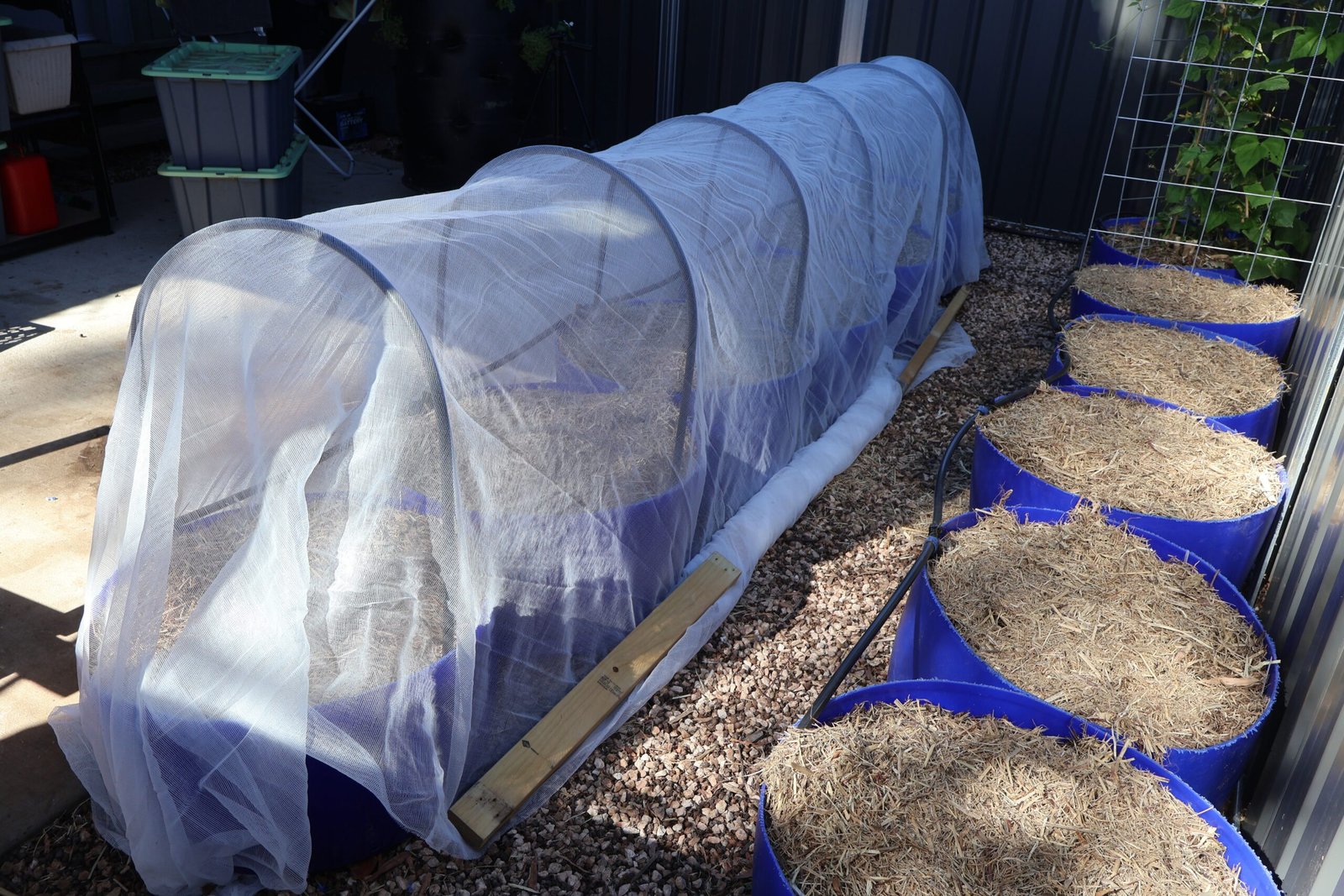
The main goal was to create a basic cover over the row of six drums where the broccoli and cauliflower are going.
Anything in that family tends to get hammered pretty quickly, so I wanted to get some protection over them early. The idea was not to make anything elaborate, just a simple barrier that would keep things covered and give the plants a better start.
The net I had did not quite fit the full length the way I originally imagined, so I had to work around that a bit and make it fit as best I could. It is one of those setups that is not especially neat, but it still does the job.
Reusing Last Season’s Materials
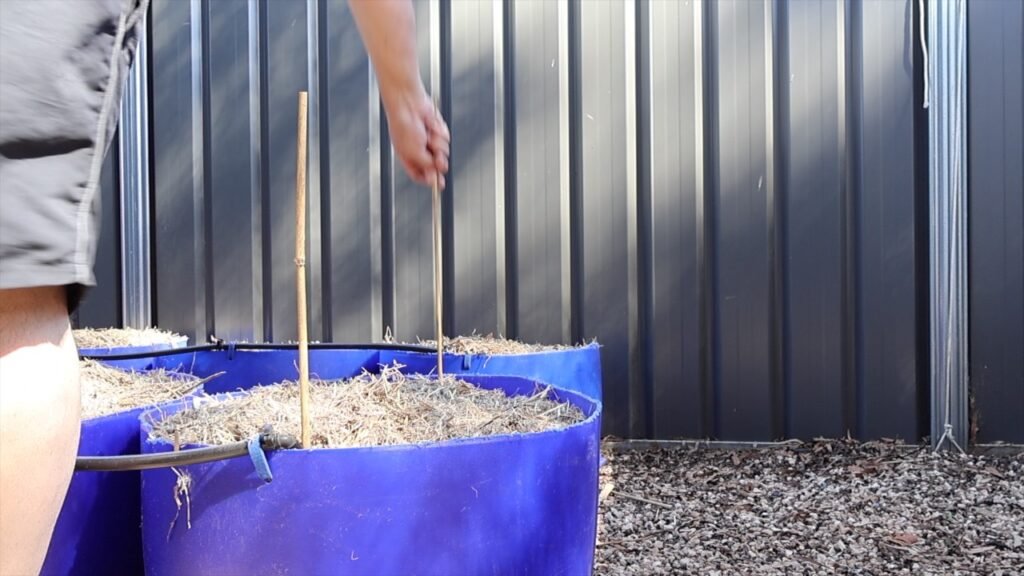
For the frame, I reused the bamboo stakes from last year’s tomatoes.
I cut them down and placed one on each side of the drums, then ran some leftover irrigation line between them to form arches across the row. Repeating that across all six drums gave the net something to sit on so it stayed lifted above the plants rather than sagging down into them.
That part came together pretty well, and it is the kind of simple structure I like most. It uses things I already have, it is easy to put together, and it can be adapted later if needed.
Making the Net Work
Because the net was only a limited size, I had to run it on a bit of an angle to get full coverage.
It was not the cleanest setup, but it covered the row without leaving obvious gaps, which was the main thing. Sometimes that is enough. A setup does not need to look perfect to be useful.
I also realised afterwards that this same frame idea would probably work well with shade cloth in summer too, which makes it feel even more worthwhile.
Holding It in Place
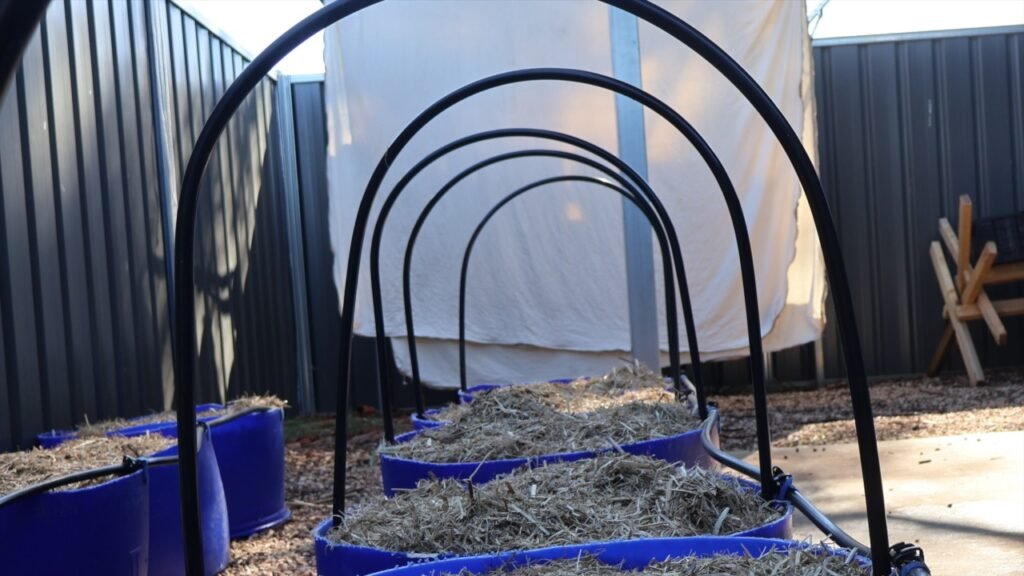
Along the sides, I used some old timber from a raised bed I had pulled apart earlier.
I did try clipping the net directly to the drums, but it pulled the net too close to the plants. As they grew, they would have ended up pressing against it, which defeats the point a bit. The timber worked better because it helped hold the sides down without pulling everything inward too tightly.
On the ends, I experimented with a couple of leftover drum sections cut down to size. They kind of worked, but not especially well. I will probably replace those with more timber later so the whole thing feels a bit more even and secure.
That tends to happen with these kinds of builds. You get something in place, see what works, and then refine it once you have lived with it for a bit.
Shifting the Herb Tower for Winter
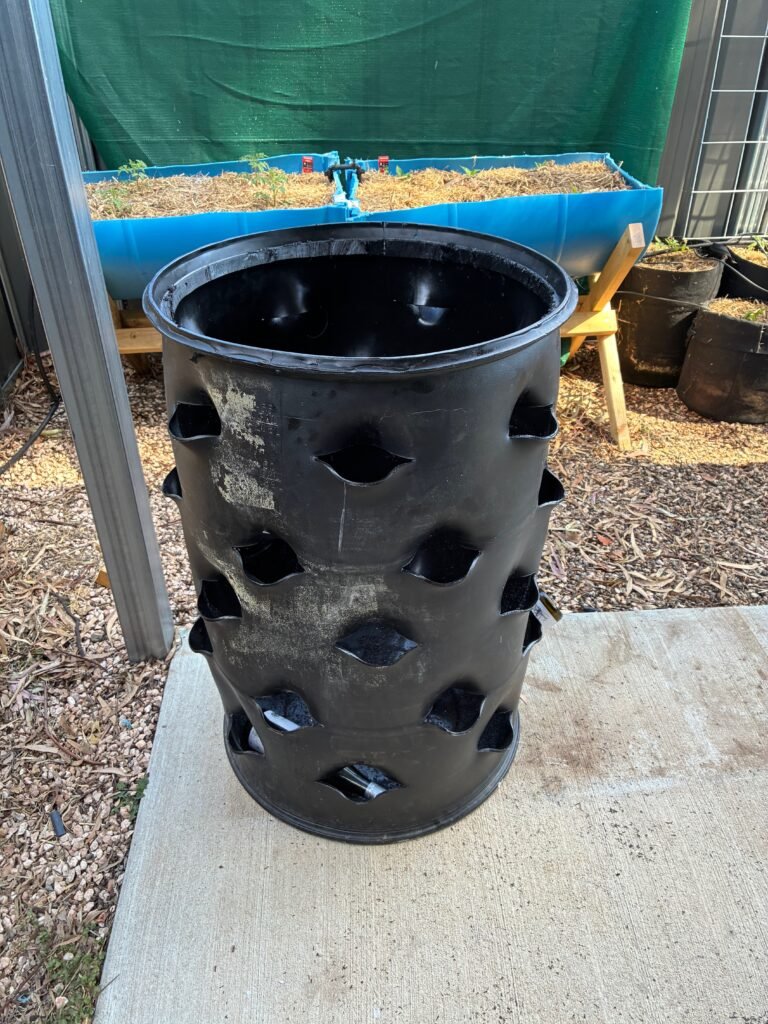
While I was already out there, I decided to reset the grow tower too.
The strawberries I had in it over summer did not handle the heat very well, especially being planted into a black drum. Rather than trying to push that setup any further, I changed it over into a winter herb tower instead.
It felt like a better use of the space for this season and a more suitable match for the conditions.
Resetting the Pockets
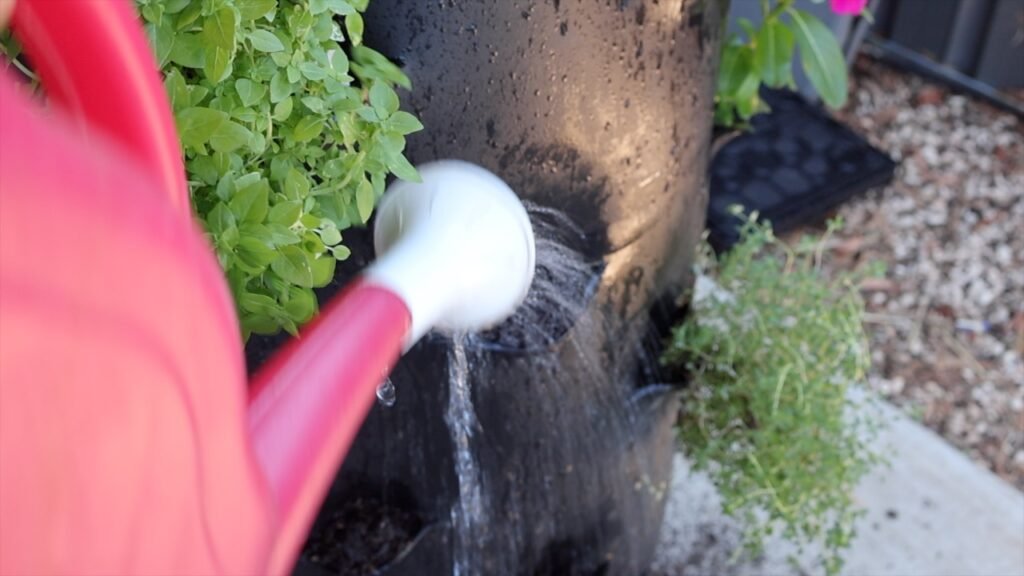
To get the tower ready, I topped up the pockets where the strawberries had been growing and added some fresh soil.
It did not need a major overhaul, just a bit of a reset. The strawberries had struggled enough that they probably had not taken much out of the mix, so it was more about refreshing the pockets and getting them ready for something new.
That kind of light reset is often enough when a setup has not really reached full production. It does not need to be rebuilt from scratch, just nudged back into use.
Planting It Out with Winter Herbs
For the new planting, I used a few winter herbs including coriander, thyme, dill, and a couple of different chives.
They should handle the cooler weather much better in that setup, and the tower feels more useful already with that change alone. I may still add a few more once I check what I have on hand, but for now it is enough to get it going again.
I like these small seasonal shifts. A setup that failed in one season does not have to stay failed. Sometimes it just needs a different job.
Keeping What Is Still Growing
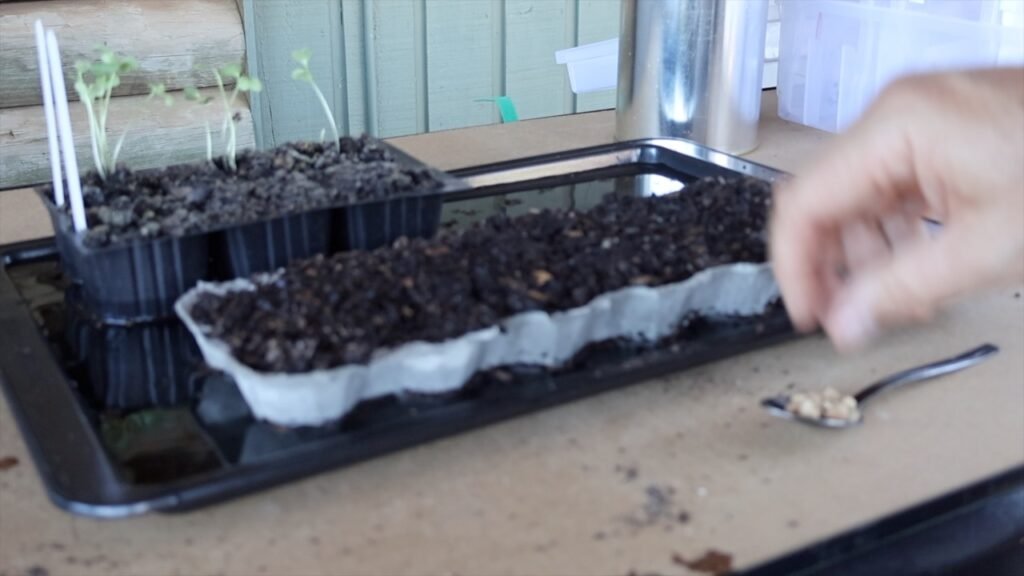
Not everything in the tower was finished, so I left a few things in place that were still doing all right.
There did not seem much point in pulling something out if it was still producing, even if the overall setup was changing. I would rather work around what is still growing and let it keep going for as long as it can.
That approach tends to suit me better than clearing everything out all at once. It keeps the space usable day to day, and it makes the change feel more gradual and practical.
There was also a more personal reason for leaving some of it in. My daughter’s guinea pig loves the basil, so while it is still there, it is worth keeping for that as well.
Keeping the Garden Usable as I Go
More than anything, this round of work was about keeping the garden usable as I move through the season.
The insect cover is not perfect, but it should help protect the brassicas while they get going. The herb tower is no longer set up for summer strawberries, but it now has a better purpose for winter. Both jobs were simple, mostly built from what I already had, and both made the space feel more practical.
That is usually when these setups work best for me — not when they are finished perfectly, but when they are adjusted into something useful and easy to live with.
What Comes Next
There will probably still be a few changes to make from here.
I want to improve the ends of the netting setup and see how well the cover holds up once the plants start growing into it. I will also keep adding to the herb tower if it makes sense and see how the remaining plants hold through the cooler season.
For now though, it is in a better place than it was, and that is enough to keep things moving.