Making Home Easier to Live In
I’m not really trying to create a perfect setup at home.
I’m not aiming for pretty cupboards, matching containers, or some sort of Instagram version of organised. All I’m really trying to do is make my home easier to live in.
That’s the goal behind a lot of the little resets I do. Whether it’s in the house, the garden, or even the camper, I keep coming back to the same basic idea: everything needs a home, and things need to be easy to put back when I’m done.
Recently that showed up in two different places at once — with my tools, and in the kitchen.
Why I Organise for Ease, Not Perfection
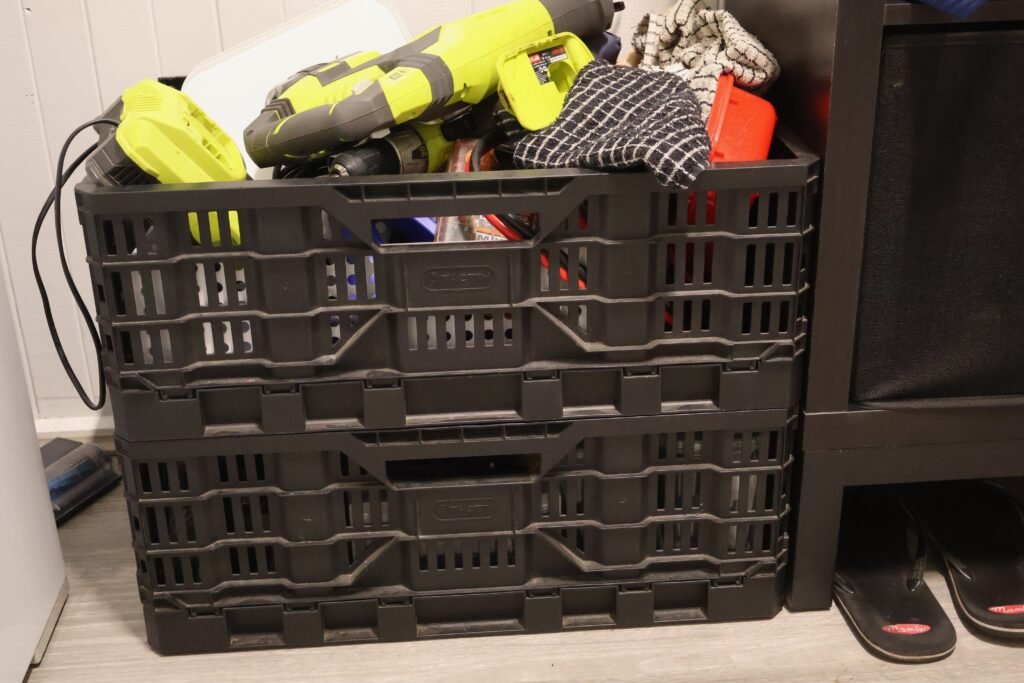
For a long time I had my tools and bits of hardware sitting in a couple of crates in the laundry. It worked pretty well, but only in that way where you keep telling yourself it’s fine.
Things would get mixed together, I’d rummage through the crate looking for one thing, and then shut it again thinking I’d sort it out properly later.
Later never came.
That’s something I’ve noticed with a lot of home systems. If they’re awkward to use, they’re usually awkward to maintain too. It doesn’t matter how good the idea is if it feels annoying every time you need to use it.
For me, organising isn’t really about making things look good. It’s about making life feel simpler.
The Problem With My Old Tool Storage
The old crates did the job, but they weren’t ideal.
Small bits got mixed in with bigger tools, things shifted around, and I’d end up digging through everything just to find one item. It was one of those setups that was always almost good enough, but never quite right.
I kept telling myself, “She’ll be right mate,” or that I’d fix it up when I had more time, but that never really happened.
Eventually I realised I needed something that felt more natural and easier to keep on top of.
Why I Moved My Tools Into a Toolbox
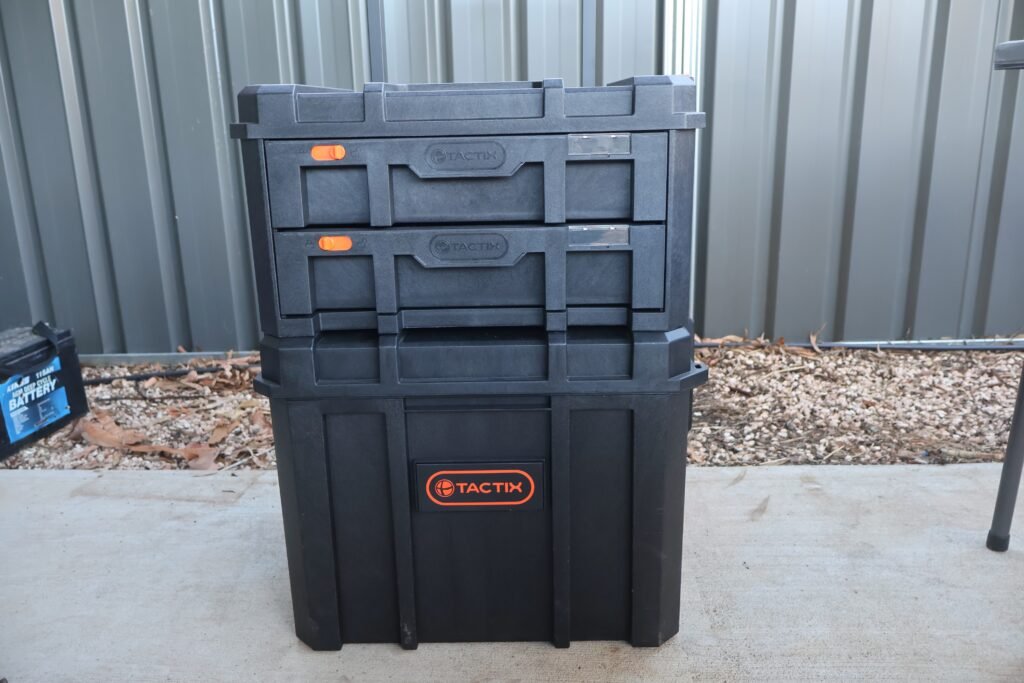
When I reorganise anything, I like to lay everything out first so I can actually see what I have.
That helps me work out what belongs together, what I use the most, and how much space things are really going to take up. Once it’s all in front of me, it’s much easier to picture how it might work.
That’s what I did with the new toolbox. I moved things around a lot before I was happy with it. Different drawers, different groupings, different layouts. It took a bit of testing, but that’s usually how it goes.
I don’t need it to be perfect first go. I just need it to make more sense than it did before.
Why Drawers Work Better for Me
For me, drawers make a big difference.
They help separate smaller items from bulkier ones, and when a drawer slides out properly, you can reach everything without losing half of it at the back. The deeper bottom section works better for bigger tools, while the upper drawers make it easier to group smaller things in a way that actually works.
That’s the part I care about most. I want to be able to find things at a glance and put them back without it becoming a chore.
If it’s easy to use, it’s much more likely to stay that way.
Using the Same Organising Rules in the Kitchen
The funny thing is, once I started thinking about the toolbox properly, I realised it was really the same issue I’d been trying to solve in the kitchen too.
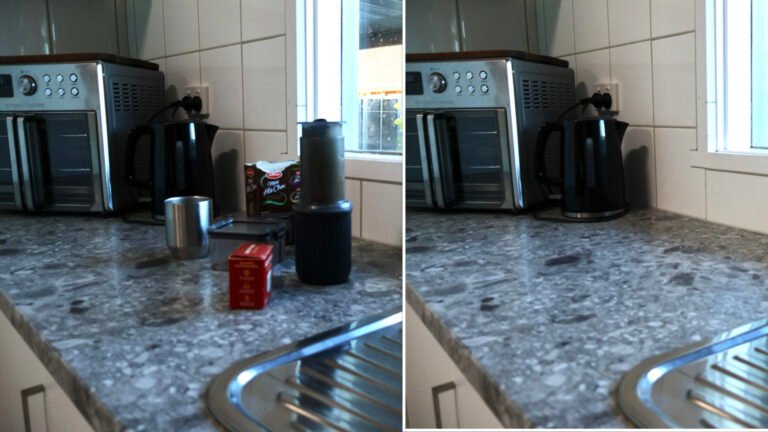
The kitchen is one of the most used parts of the house. We use it several times a day for meals, snacks, drinks, and cleaning up. If it doesn’t work well, you notice it pretty quickly.
To make it work for me, I want things grouped in a way that matches how I actually use them.
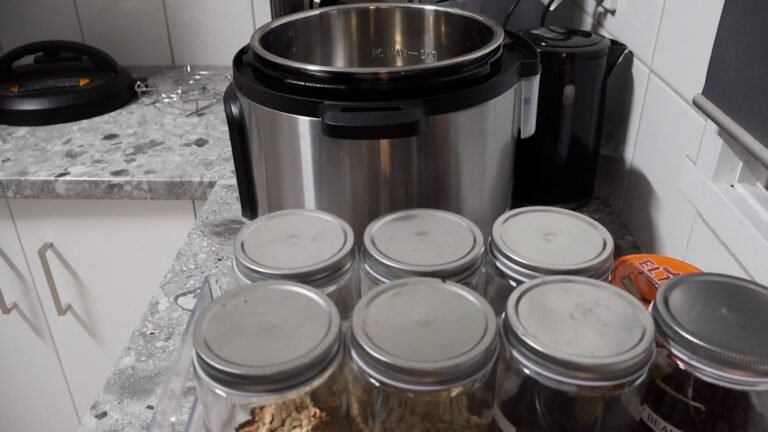
I find it important to keep everyday stuff easy to reach and to keep like things together. Spices together. Beans together. The things I use regularly in one area, not spread across three different shelves.
That way I can grab all the things I need at once and return them all at once too.
How I Organise My Kitchen Drawers
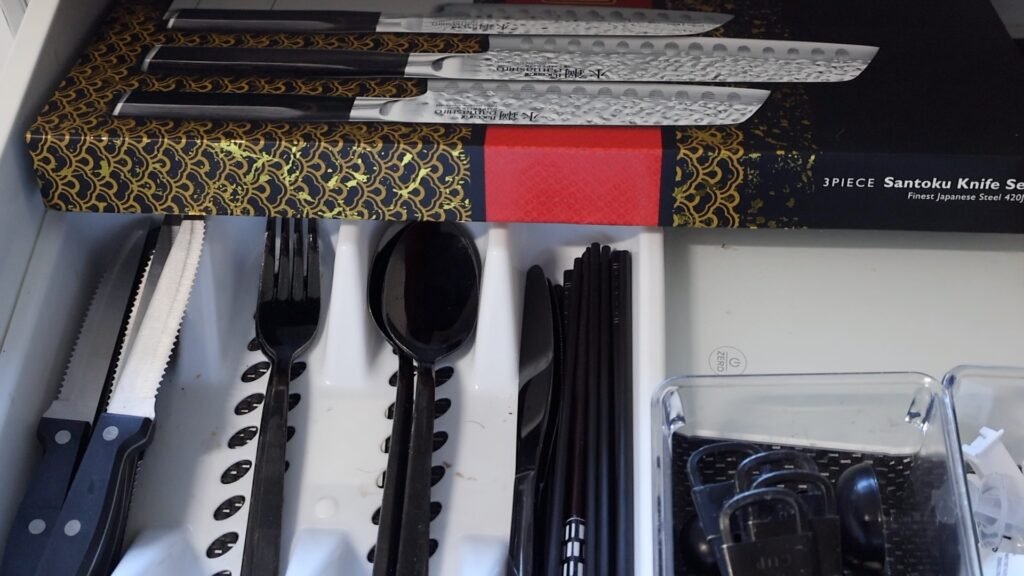
My utensils are grouped by function instead of just wherever they fit.
The things I use the most — cutlery, measuring spoons, and knives — sit in the easiest place to reach. Cooking utensils are under that, still easy to get to. Then wraps, cleaning cloths, and tea towels sit nearby but lower down the priority list.
The drawers don’t need to be fancy. A few simple dividers are enough if they make things easier to access and easier to put away when I’m done.
That’s really all I’m looking for.
Creating Simple Pantry Zones
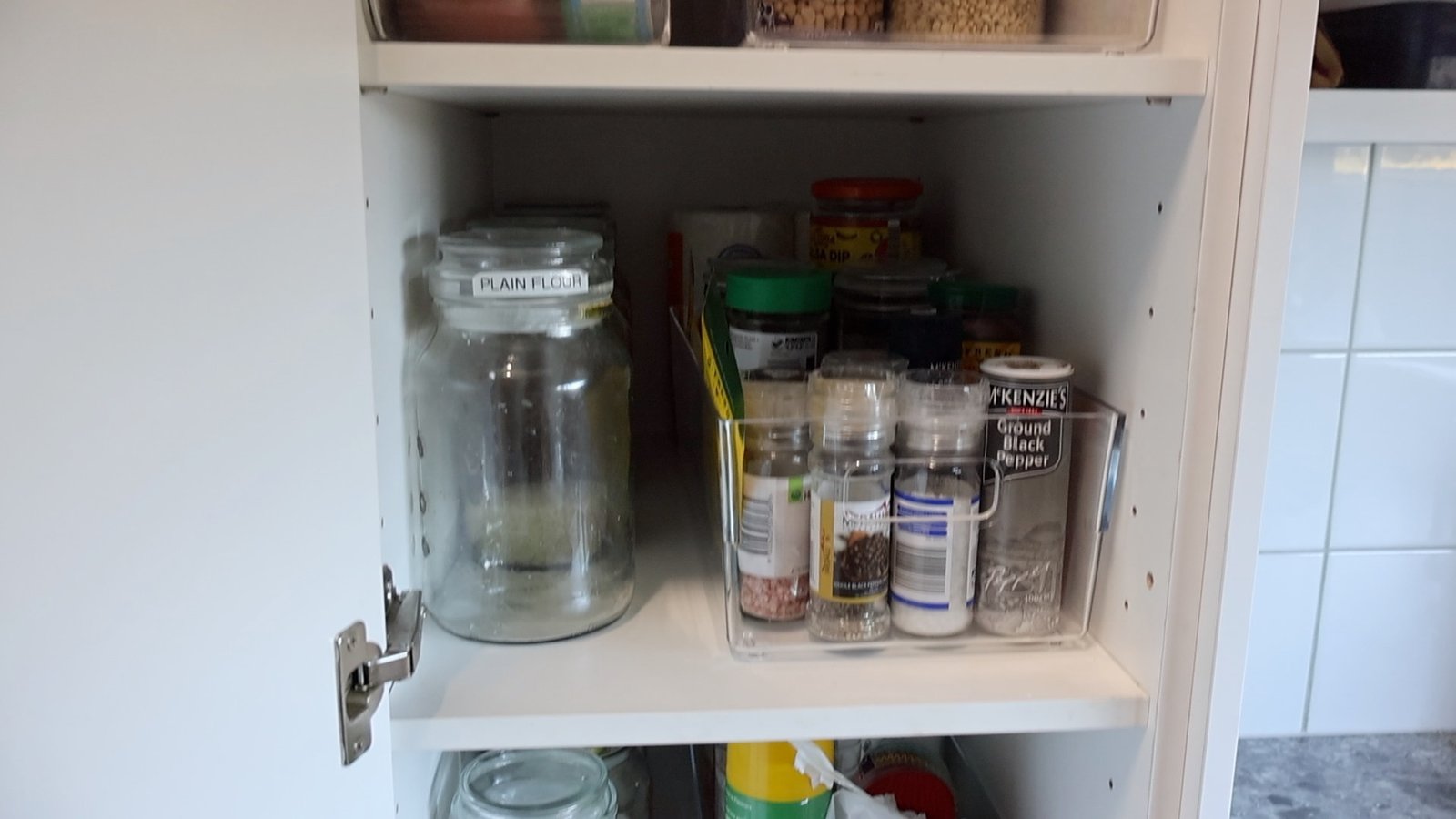
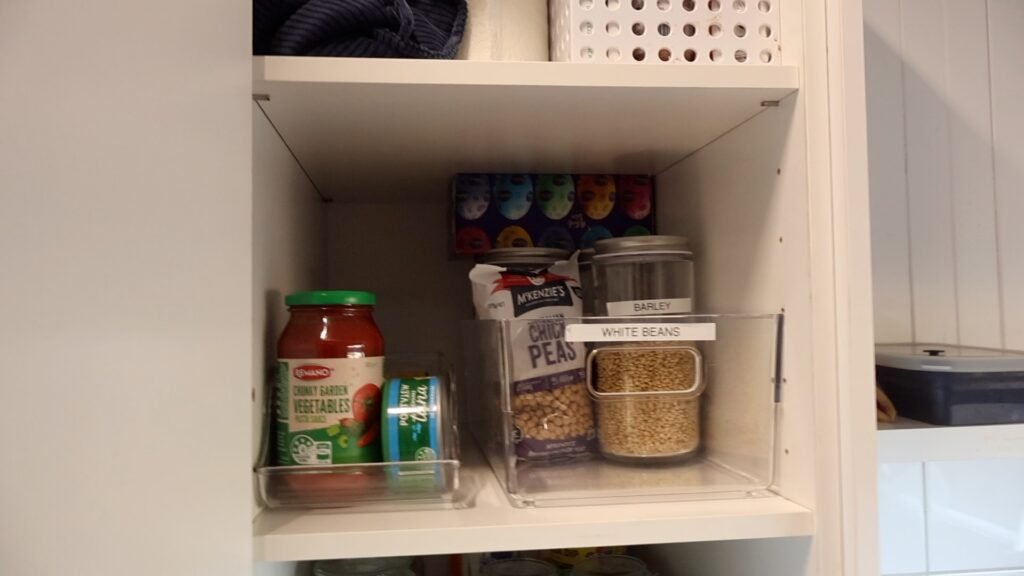
The pantry works best for me when it’s broken into simple zones.
Beans and meal basics like pasta and rice sit together on one shelf. If I’m making burritos or something similar, I can just pull out the bean tray and I’m ready to go.
The same goes for spices. If I’m mixing spices, out comes the herb tray. When I’m finished, everything goes back in together.
I’ve done the same with baking, drinks, and snacks. Each section has its own easy-access tray with the basics. Extra food and bulk food sit lower down.
It’s not all finished, and there are still a couple of shelves that need work, but it already functions a lot better than having everything loosely spread around.
Making Lower Cupboards Easier to Use
The lower cupboards and appliance shelves can become a bit of a catch-all pretty quickly.
Things get pushed to the back, hidden behind something else, and suddenly you’re playing hide and seek every time you need the blender or baking gear.
Using crates and trays there has helped a lot. If things belong together, I try to keep them together. That might be baking things, appliance parts, or anything else I tend to use as a group.
The trays on the bottom shelves help too. Being able to pull things out instead of reaching awkwardly into the back makes a big difference.
My Simple Rules for Organising at Home
My organising rules are pretty simple:
If I use something a lot, I keep it handy.
If I use things together regularly, I try to keep them together, preferably in the same container.
If I keep avoiding putting something away, then there’s probably a problem with the system.
And if things keep getting lost at the back, drawers usually help.
It’s not about creating an Instagram system. It’s about creating one that’s easy to maintain.
A Practical System Is Better Than a Perfect One
Some parts of the house will keep changing, and I think that’s normal.
You don’t always know what works until you’ve lived with it for a while. A setup can look good and still not be practical. That’s why I’d rather have a system that can adapt over time than one that looks finished but doesn’t really suit everyday life.
Sometimes a small change around the home can make a bigger difference than you expect.
I find it funny how one small reset often leads to another. Replacing one container frees it up for somewhere else, and suddenly one change rolls into the next.
The toolbox and the kitchen are doing very different jobs, but the principle underneath them is exactly the same.
My home feels easier when things have a proper place.
It’s not perfect, but it is getting better.