Planning the Winter Garden Before the Drums Even Arrive
Starting with the plan
I didn’t have the drums yet for the winter garden, but it was still time to work out what I wanted the setup to look like.
Before I start building anything, I wanted to get clear on the numbers, the layout, and the limits I’m working with.
The numbers
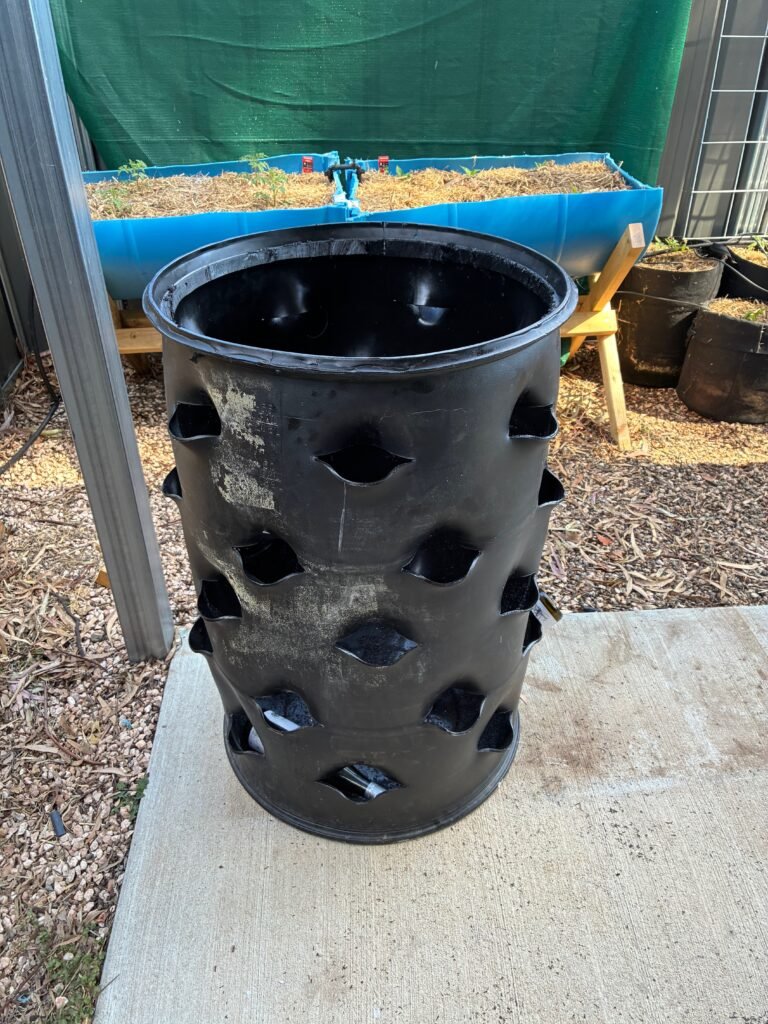
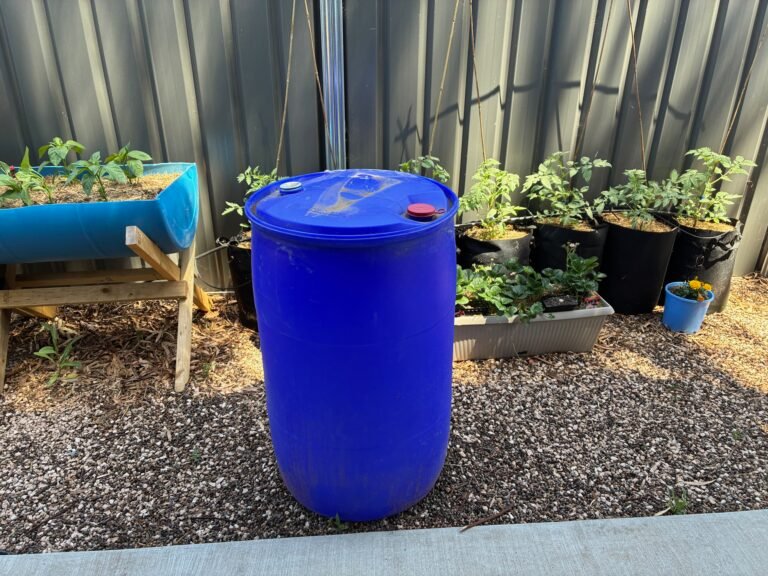
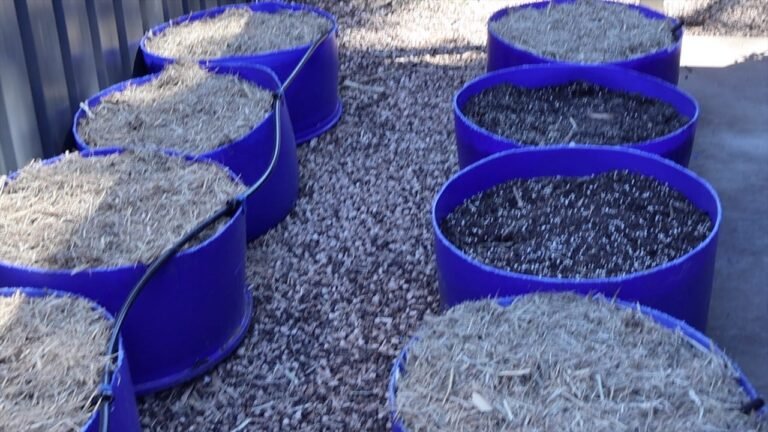
The plan is twelve 70-litre drums.
Four for broccoli.
Four for cauliflower.
Four for peas.
The pea drums will have six to eight plants in each.
That gives me a simple structure that should be productive without becoming too hard to manage.
The timing issue
One of the main challenges is timing.
When I start planting, Mildura will still be hot. By the time I’m harvesting, it should be winter. So the setup has to cope with heat early on and then be easy to protect later when the cold comes in.
Making it travel-proof
I’m also booked to go to Japan from 30 May to 12 June.
That means the garden has to be able to keep going while I’m away. Irrigation and simple protection matter more because of that. If the setup only works when I’m checking it all the time, then it’s not the right setup.
The broccoli drums
For the broccoli, I’m planning on growing full-head plants rather than smaller multi-head types.
They’ll get netting early to keep pests off while they establish, and the companion plants will be quick crops that won’t compete too heavily once the broccoli starts sizing up.
Each drum will have irrigation as well.
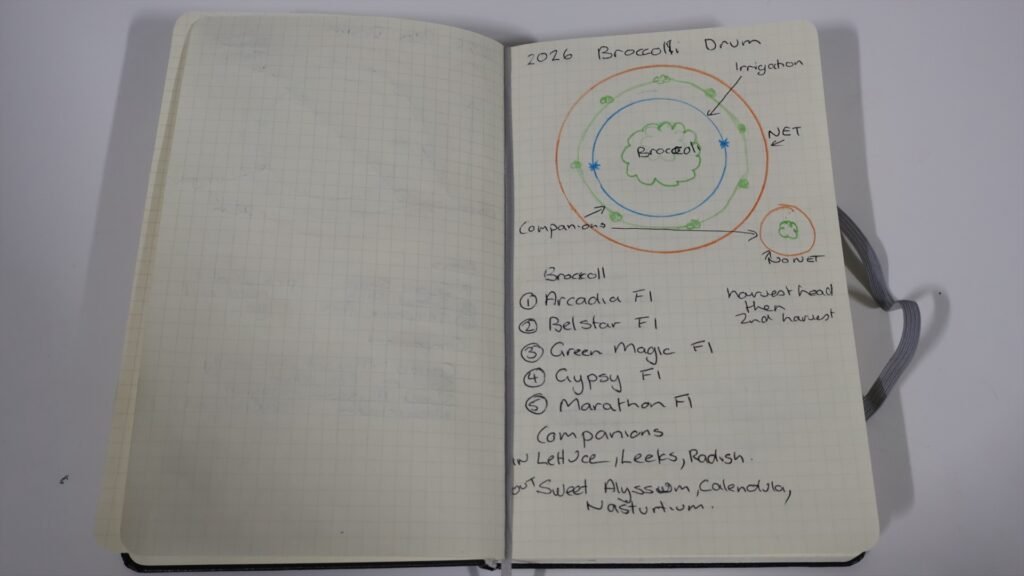
The cauliflower drums
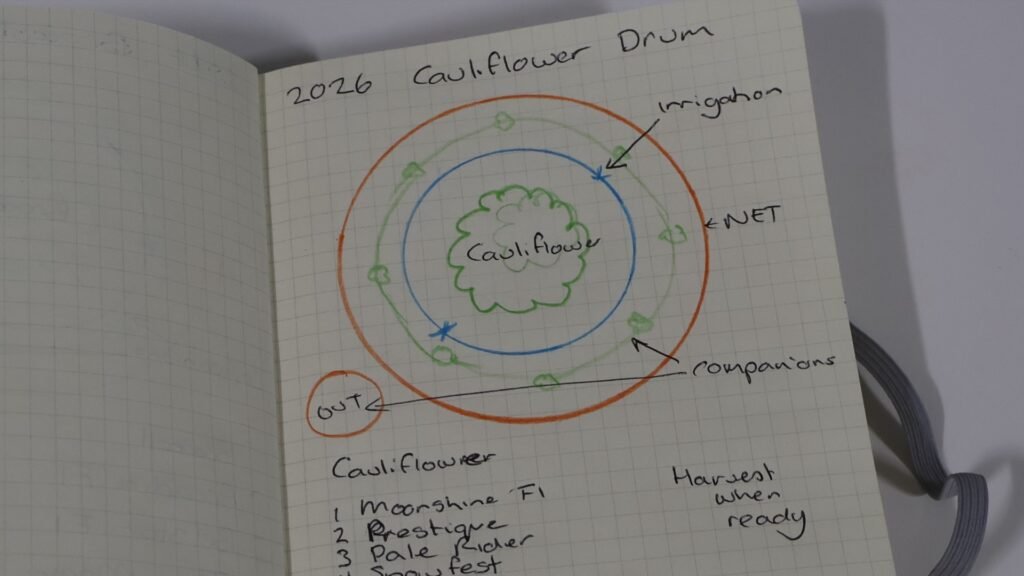
The cauliflower will follow the same basic idea.
Full-head plants, netting early, and companion plants that are quick to harvest and don’t take too much from the main crop.
Keeping broccoli and cauliflower similar should make the whole system easier to manage.
The pea drums
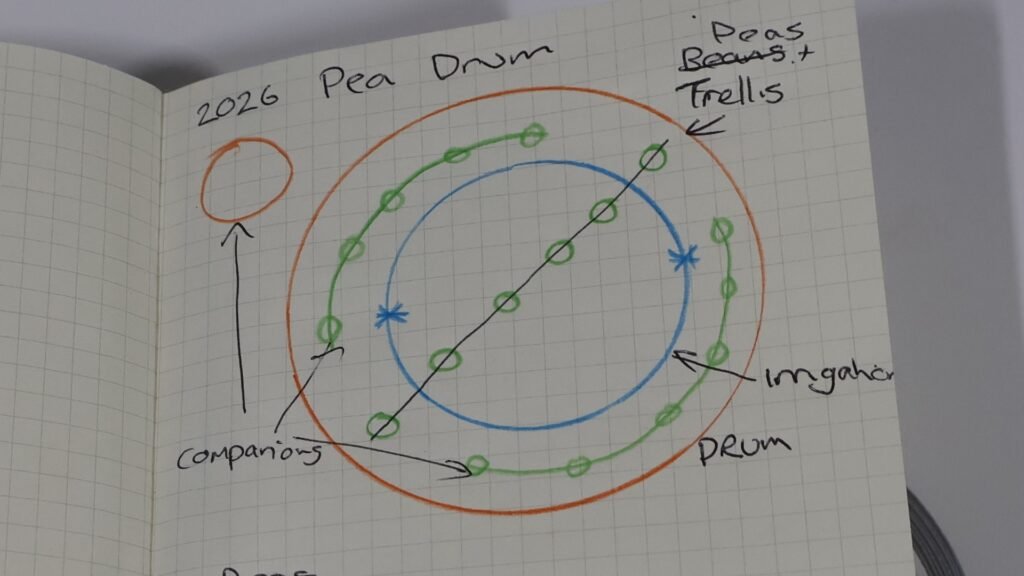
The pea drums will be simpler.
They’ll have a trellis, and at this stage I’m thinking of doing two drums of sugar snap peas and two drums of snow peas, depending on the varieties I end up getting.
I’m not planning on netting them, because pest pressure seems lower on peas here, but they’ll still have irrigation.
Buying seeds with backups
I’ll be getting the seeds from Happy Valley Seeds because I’ve had good results with them before.
For each crop I’ve got a shortlist of preferred varieties suited to arid conditions. If I can’t get the first choice, I’ll move down the list.
That makes the buying process quicker and stops me getting stuck on one exact variety.
Keeping the layout practical
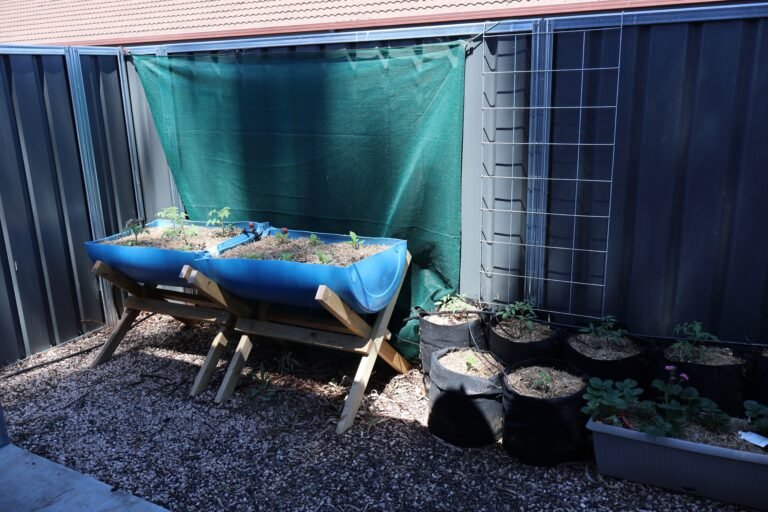
The winter garden will go in the backyard.
It gets good morning light and decent afternoon sun, it’s close enough to the house to make harvesting easy, and it already has irrigation in place. It should also be easy enough to throw covers over if frost becomes an issue later in the season.
The irrigation limit
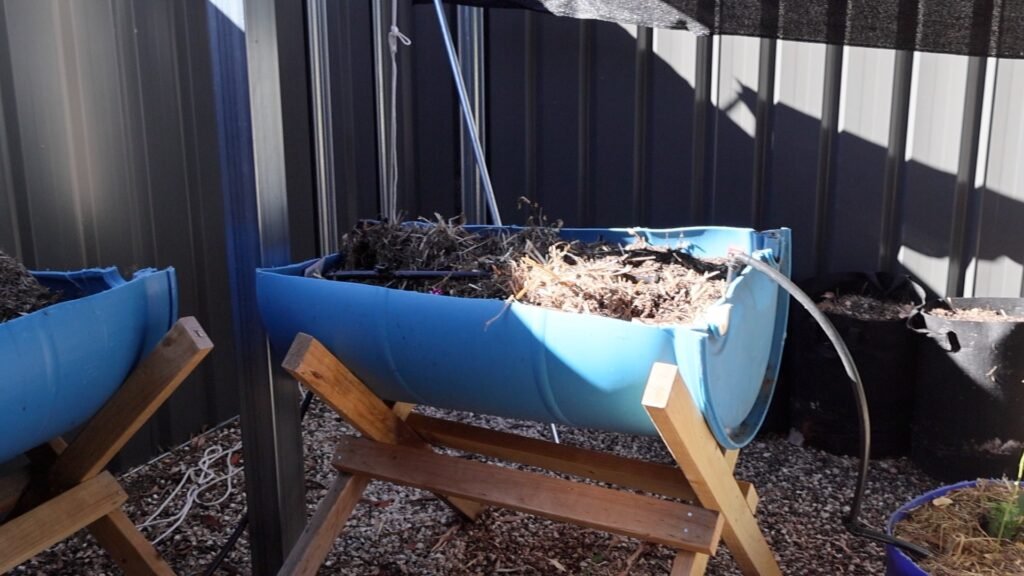
At the moment, there’s only one dripper line out the back.
That means all the drums will be on the same timer. To vary the water, I’ll need to adjust the dripper setup on each drum rather than run separate schedules.
It’s not ideal, but it should still work.
Resetting the soil
Before planting, I’ll do a partial soil reset on the old drum soil and the grow bag soil.
The plan is to add compost and perlite, and possibly dolomite and slow-release fertiliser for the broccoli and cauliflower since they’re heavy feeders.
It’s not the exciting part, but it’s important if the season is going to go well.
Where it’s at
There’s no finished setup yet.
No drums in place and nothing planted yet. But this planning stage still matters. Working through the layout, timing, and irrigation now should make the build and planting much smoother later.