My Japan Packing System — One Bag for 15 Nights
Most Japan packing guides give you a list. This one gives you the system behind the list — and why that difference matters when you’re moving through seven different accommodation types across fifteen nights.
I’m a lean manufacturing practitioner. I’ve spent more than twenty years building systems that reduce friction in workplaces and at home. When I started planning for this Japan trip — Tokyo, Niigata, Ibaraki, Tsukuba, an onsen, a family home, public transport, and a hire car for a couple of days — I applied the same thinking to my bag. Every item was chosen to remove a specific problem. Nothing went in to cover a situation that probably wouldn’t happen.
This is what that looks like in practice.
— THE FRONT POUCH — THE TRANSIT LAYER —
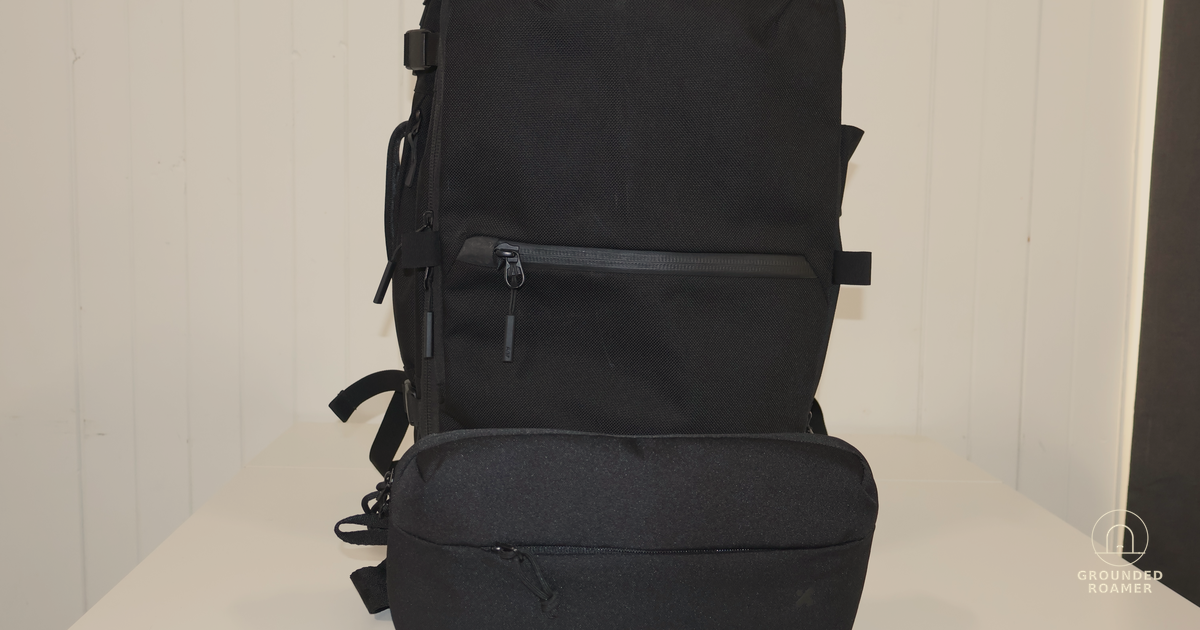
The front pouch is the easy-access layer. Everything needed while in motion lives here — passport wallet with two cards only (a simple security split), a 60-watt charger, two short cables, a slim battery bank, over-ear headphones with AI translation, and a pen.
Short cables are a deliberate choice. Long cables tangle, take up space, and the distance to a power point is rarely more than a metre. Short cables do the same job in a fraction of the space. Small decision — meaningful over a fifteen-night trip.
The AI translation headphones earn their place specifically for Japan. Not a nice-to-have. A genuine tool for a country where English isn’t always available.
— THE SLING BAG — THE FLEXIBLE DAYTIME LAYER —
A camera sling bag was added late in the planning process — and it changed the shape of the system during the day. During the day it carries the camera and a small foldable shopping bag. At the airport, where photo opportunities are limited, it will likely go inside the main bag and the front pouch handles transit access.
The honest answer is that this part of the system is designed but flexible. The follow-up post after the trip will be where the real answer lives — what actually worked, what got adjusted on the road.
— THE TOILETRY SYSTEM — THREE ITEMS, THREE PROBLEMS —
Bar soap instead of liquid. Carry-on safe without question, no liquids bag, nothing that can leak. It sits inside an exfoliating soap bag — no separate sponge needed. Then the whole thing goes into a Matador FlatPak soap case.
The Matador FlatPak uses a vapour-permeable material — waterproof from the outside, but moisture escapes as vapour from the inside. Put a wet bar of soap in after a shower, roll it closed like a dry bag, clip it, pack it away. The soap dries through the fabric. No mush, no mildew, nothing wet in the bag.
A Matador quick-dry towel rounds out the toiletry kit. Staying in a family home and an onsen across the trip — bringing your own removes a variable that doesn’t need to exist.
— THE SHOWER CUBE — ONE MOVE, EVERY TIME —
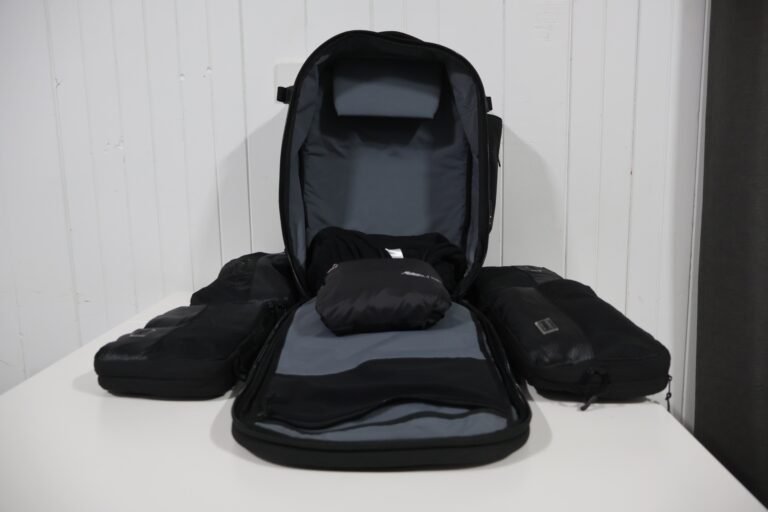
Three compression packing cubes in the main compartment. Each one identical — one merino t-shirt, two pairs of merino socks, two pairs of boxers.
When it’s time to shower — in a Tokyo hotel, the onsen, a family bathroom, anywhere — one cube and the toiletry bag is all that’s needed. One grab. Everything for a shower and a change of clothes is already together. No opening multiple cubes. No digging through the main compartment.
Fifteen nights. Seven accommodation changes. The same system works every single time.
Merino wool earns its place specifically here. It handles several nights between washes without holding odour the way cotton does, and it dries quickly. For a trip where you’re constantly moving, that matters more than variety.
— THE CLOTHING SYSTEM — SIMPLE DECISIONS MADE EARLY —
A merino jumper and a windbreaker jacket alongside the cubes in the main compartment.
The jacket does two jobs: warmth leaving home in the morning, then tucks into the top of the bag once the temperature rises. Its primary value is the pockets — hands-free movement through train stations, baseball games, shrines, and markets. The jacket pockets are the system for keeping essentials accessible without thinking about it.
Two pairs of jeans — one worn travelling, one in the bag. Tracksuit pants were considered. Comfortable, pack down small — makes sense on paper. But the honest answer is they’d stay in the hotel room. The second pair of jeans gets worn. That’s the deciding factor.
One pair of shoes. A lot of walking across a lot of days. Comfort over options. In Japan where shoes come on and off regularly at shrines and restaurants, one simple pair that works everywhere is cleaner than managing two.
— WHAT THE SYSTEM IS REALLY ABOUT —
Looking at this bag packed and ready, what’s visible isn’t a list of items. It’s decisions that have already been made.
No wondering where the socks are. No digging at a train station. No liquids issue at security.
This is the same thinking applied at home — setting up zones in a cupboard, resetting the kitchen on a Sunday, designing where things live before they’re needed. It’s not about having less. It’s about a system that runs itself so attention stays on where you are — not what’s in the bag.
A follow-up post will document what worked, what got adjusted, and what would be done differently. That’s always where the real lessons are.
— FREQUENTLY ASKED QUESTIONS —
Does one bag really work for 15 nights in Japan?
With the right system, yes. The key is merino wool for the clothing rotation, compression cubes for organisation, and bar soap for the carry-on toiletry setup. Japan’s train system also rewards light packing — a carry-on sized bag is significantly easier to manage on the Shinkansen and through busy stations.
What is a shower cube system for travel?
Three identical compression packing cubes — each containing the same clothing items for one change. When showering, grab one cube and the toiletry bag. Everything needed is in one move. No searching through multiple cubes or the main compartment.
Why bar soap instead of liquid for travel to Japan?
Bar soap clears carry-on security without going into the liquids bag. Combined with an exfoliating soap bag and a Matador FlatPak soap case — which uses vapour-permeable fabric to dry the soap through the material — there’s no leaking, no mush, and no mildew.
What is the Matador FlatPak soap case?
A travel soap case made from vapour-permeable, waterproof material. It seals in liquid water but allows moisture to escape as vapour, so a wet bar of soap dries inside the case without getting anything else wet.
Grounded Roamer is written by a lean manufacturing practitioner with 20+ years experience creating systems that make everyday life run with less friction. Based in Mildura, Victoria, Australia — documenting a quieter, more self-sufficient way of living, one small adjustment at a time.
Job title: Lean Living Practitioner