Simple Kitchen Setup: Why I Group Things by Use, Not Type
I moved into this place about three years ago, after spending around a year and a half living in my car. Back then I had a camping stove, two pots and a BBQ.
Before that, I’d lived in a four-bedroom house with my wife. We had just about every gadget you could think of, and I tried all sorts of organising systems to keep it under control. Living with just the essentials felt easier. If people were coming over to the house, we’d spend a day, sometimes a whole weekend, getting it back into shape.
So when I moved in here, I didn’t set out to make things minimal. I don’t really think of myself as a minimalist. I’m more just practical. I wanted the kitchen to be easier to use, easier to keep on top of, and more straightforward day to day. Less moving things around. Less losing things in cupboards. This is where it’s ended up, for now.
Why does a kitchen get harder to use over time?
Because things drift. Parts get separated, things get pushed to the back and stacked in front of each other, and eventually they disappear from use. You know you’ve got them, but you stop reaching for them because they’re harder to get to. Even after moving in here, I noticed the same pattern starting again.
The rice cooker cable would be in one cupboard and the food processor blades in another. Before I could even start cooking, I’d be on a hunt. After living with so little, I noticed that pretty quickly, and I didn’t want that friction creeping back in. So instead of one big reset, I adjusted things as I went. One drawer. One cupboard. One section at a time.
Which kitchen tools are worth keeping?
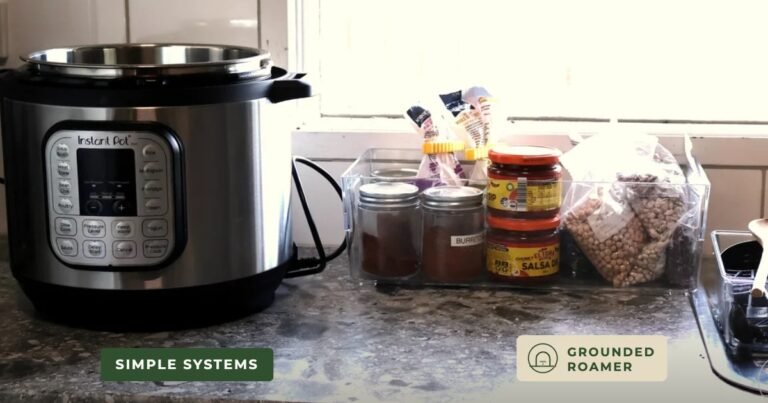
The ones that do more than one job. I used to have more single-purpose things, and they all took up space in their own way. When my rice cooker broke, I didn’t replace it. A couple of mates at work talked me into an Instant Pot instead, and it turned out far more useful than I expected.

It took over more than the rice cooker’s job. I use it for rice, bulk meals and dried beans, which I never really used before. Dried beans instead of cans save room and money. So it didn’t just save space. It changed how I cook.
The food processor doubles as a blender just by switching the attachment, and everything for it lives together in one crate. When I need it, I grab the crate, use what I need and put it all back together. No searching. No missing parts. In manufacturing, that’s a kit: everything for one job, kept together, returned together.
Even coffee went the same way. I moved to an AeroPress. It’s simple, easy to clean, there’s no descaling or glass to break, and I can take it to work or when I travel. Over time it became less about having options, and more about having things that suit the way I actually use the kitchen. A few more of those swaps are in 8 things I stopped buying.
Should you organise a pantry by type or by use?
By use. I used to organise mine by type, with all the jars together and all the cans together. It looked tidy, but it never matched how I actually cook. To me, it felt more like trying to have an Instagram pantry than something that worked. So I started grouping things by use instead.
Now I’ve got trays: one for beans, one for spices, one for baking, and one for snacks and spreads. When I’m cooking Mexican, I grab the tray with all the beans, and it all goes back together afterwards. Instead of grabbing bits and pieces from different shelves, I take one tray that already has everything for that kind of meal.

It’s a small shift, but it makes a big difference when you’re actually cooking. Less stopping and starting. Less going back and forward. And because everything goes back as a set, it stops things spreading out again over time.
Where should pots go in a small kitchen?
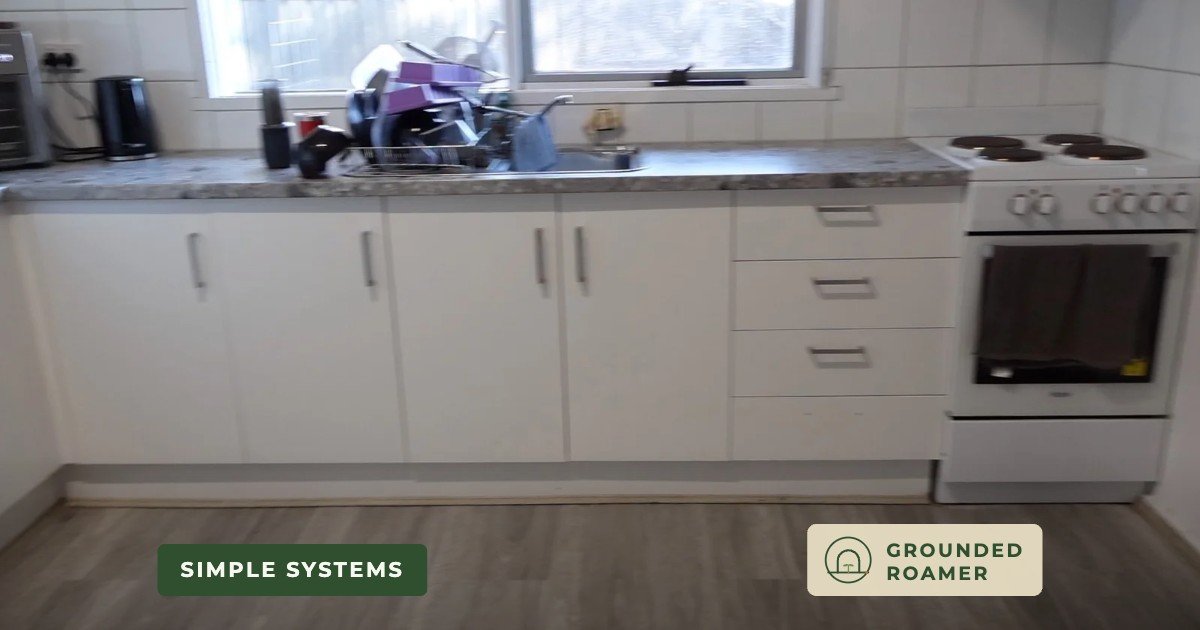
In a drawer next to the stove. Moving the pots into the bottom drawer made a bigger difference than I expected. In a cupboard, you always need the one at the bottom and have to move everything else first, and the lids never stack properly. Now they’re right next to the stove, exactly where I need them.
The rest of the drawers follow how often I use things. The things I reach for many times a day are at the top, and the less frequent things sit lower down. I’ve since taken the same idea further and set the kitchen up around cooking workstations.
| Where | What lives there |
|---|---|
| Top drawer | Things I reach for many times a day: cutlery, knives, the basics |
| Second drawer | Meal prep tools I use once or twice a day: spatulas, spoons |
| Third drawer | Support items: wraps, tea towels, ziplock bags |
| Bottom drawer | Pots, right next to the stove |
| Pantry trays | One each for beans, spices, baking, and snacks and spreads |
| Plate cupboard | Plates standing up on a tiered wire rack, cups in a tray, mixing bowls stacked in a tray |
| Crates | The food processor and all its parts in one; collapsible cookware, bento boxes and microwave containers in another |
How do you save space in a small kitchen?
With small decisions that build on each other. Collapsible cookware doesn’t change how I cook, it just takes up less room when it’s put away. The plates stand up on a tiered wire rack instead of being stacked, which saves space and makes them easier to grab. The mixing bowls stack together neatly and are still easy to get to.

We also switched to the same cups for hot and cold drinks. That stopped the cupboard filling up with different mugs and glasses. We rinse or wash them between uses, and they live together in a tray, so I can pull the tray out instead of reaching in and shifting things around.
None of it is complicated. A lot of this isn’t about having less stuff. It’s about making the stuff I do have easier to use.
Is a simple kitchen ever finished?
Not really. If anything, this setup is helping me work out how I’d want my own place to be one day. I reckon drawers are the way to go, with maybe one or two cupboards for the bigger, bulky things. But it keeps shifting as I use the space. If something feels awkward, I adjust it. If something works well, it stays.
Overall, it’s made the kitchen feel calmer. Less searching, less moving things around, less friction. And that’s really all I was aiming for. If you’re simplifying your space too, it doesn’t have to be one big reset. Start small. One drawer. One cupboard. One section at a time.
What’s one thing in your kitchen that always seems to get in the way?
Grounded Roamer is written by a lean manufacturing practitioner with 20+ years experience creating systems that make everyday life run with less friction. Based in Mildura, Victoria, Australia — documenting a quieter, more self-sufficient way of living, one small adjustment at a time.
2 Comments